
How Art Prints Age Beautifully – Care and Placement Over Time
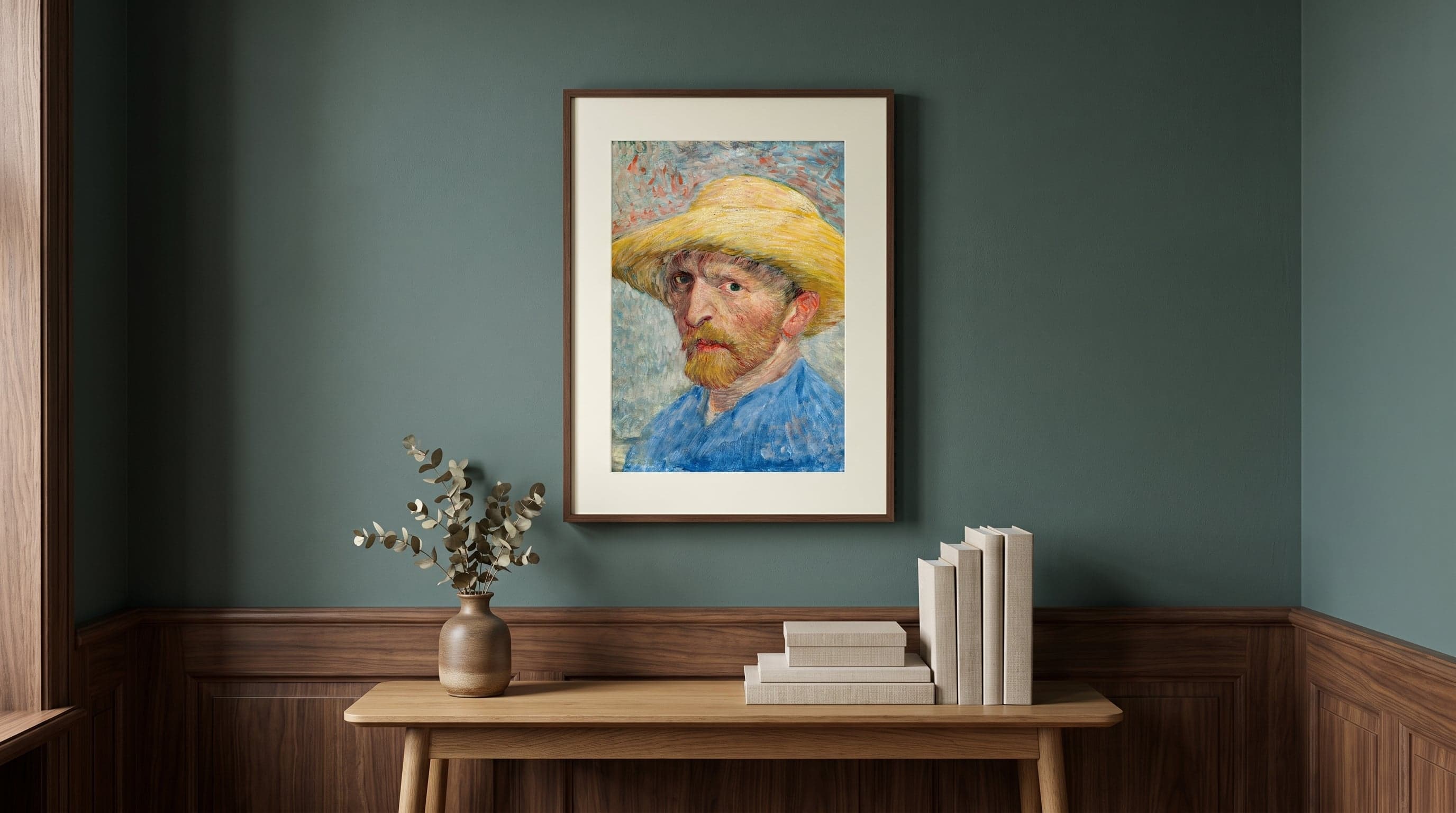
An art print never stops changing just because it's hung on a wall. Paper reacts to humidity, colour pigments fade in proportion to the light they're exposed to, and even the most tranquil wall space carries with it a slow, almost imperceptible wear. The question isn't whether a print ages, but how — and whether it ages gracefully or falls into decline.
There's something honest in that realisation. Caring for posters, then, is less about shielding a print from life and more about understanding the forces that actually wear it down — and making informed choices based on that understanding.
Much of what determines how a piece stands the test of time is already decided before it's even hung: the paper it was printed on, the technique used, how the pigments are composed. The rest comes down to placement.
Light as the first test – why colours fade over time
Sunlight is the most obvious culprit, but it's rarely sudden exposure that causes the damage — it's the repetition. Hour after hour, year after year, UV radiation breaks down the molecular structure of pigments. Blue turns grey. Red turns pink. Contrasts flatten until the image feels washed out, diluted, like a memory of itself.
It's no coincidence that museum conservators talk about light in terms of lux rather than minutes. Even indirect daylight, reflected off a white ceiling or a mirror, accumulates over time. An art print hanging directly in the sun streaming through a south-facing window will change faster than one hanging in a windowless hallway, regardless of how well it was printed.
Pigments and printing technique also matter here. Archival inks made to resist UV light break down considerably more slowly than standard consumer inks. This is one reason why giclée prints made with pigment-based inks have become the standard for art prints intended to last decades rather than years.


The humidity that works in silence – how air moisture affects paper
If light is the dramatic enemy, humidity is the quiet one. Paper is hygroscopic — it absorbs and releases moisture depending on the relative humidity of the air. In bathrooms, kitchens and basements, where humidity swings wildly between cooking, showering and airing out rooms, paper is subjected to constant microscopic movement. The fibres swell and shrink, over and over, until the paper warps, yellows, or develops stains that can't be washed away.
It's not humidity itself that's the problem, but the variation. A stable climate, even one slightly more humid than ideal, causes less wear than a room where humidity swings between extremes every day. Well-ventilated kitchens often work better for art than people assume — it's the draughty, untempered hallway window or the damp basement wall that does the most damage over time.
Paper quality matters here too. Fine Art paper with a high fibre content and the right surface treatment withstands humidity fluctuations considerably better than thin, cheap paper, which can quickly warp or become brittle.


The material determines the story before it even begins
An art print has already written its own future before it leaves the printing press. The paper's composition, weight and surface texture determine how it will behave in ten, twenty, fifty years. A thin, coated photo paper with a glossy surface might look crisp on day one, but it will yellow and become brittle faster than a thicker, matte art paper with a high proportion of cotton or wood-pulp fibre.
This is why FSC-certified Fine Art paper at around 200 grams, with a smooth but untreated matte surface, often holds up better over time than glossier alternatives. The surface reflects less light, which both deepens the colours to the eye and reduces certain types of light-related stress on the surface layer. Combined with a twelve-colour giclée process, which builds up tonal values with more nuance than a standard printer can achieve, the result is a print that ages evenly rather than in patches.
It's not about a print remaining untouched by time — rather, that the ageing should happen gracefully, like patina rather than decay.


Where in the home an art print ages best
Placement is, in practical terms, the single most important thing you can do for your print, and it costs nothing. Walls without direct sunlight — ideally in north- or east-facing rooms — are the gentlest choice. Bedrooms and hallways, where light is often indirect and more consistent, are among the best spots for art meant to hang for a long time.
Living rooms with large south-facing windows are trickier, not because you should avoid hanging art there — after all, that's where much of life happens — but because it requires some thought about exactly where on the wall the piece is placed. A few inches away from the window's light path can make a big difference over the years.
Also be mindful of temperature differences near radiators, fireplaces and cold exterior walls. Rapid temperature shifts stress both the paper and any climate variation behind the glass, which can ultimately affect how evenly the piece ages.


Everyday care – handling and cleaning the right way
Beyond placement, care mostly comes down to leaving things be. Avoid touching the print with bare hands — the oils and moisture from skin can leave marks that become permanent over time. Dusting should be done dry, with a soft, lint-free cloth or a duster, never with damp cloths or cleaning products directly on the paper surface if the print isn't behind glass.
If the piece is framed behind glass or acrylic, regularly dusting the frame itself is enough — the glass offers some protection against both moisture and touch, while UV-filtering glass can extend the print's lifespan even further. Whether you call it a poster, print or artwork, the same principles apply to how well it ages.
Perhaps the most important habit is simply taking the time, every so often, to really look closely at your prints. Colour changes happen so slowly that the eye adjusts, but a mindful eye catches early signs before they become problems — and can move, shade or reconsider the placement in time.
Frequently asked questions
- How long does a poster last?
- It depends entirely on the paper, printing technique and placement. An art print on archival Fine Art paper with pigment-based giclée ink, hung out of direct sunlight, can stay looking great for several decades, while a thin print in strong sunlight can fade noticeably within just a few years.
- Can you hang posters in direct sunlight?
- You can, but it significantly speeds up fading. If you're hanging a piece in a sunny room, it's better to place it on a wall that doesn't get direct sun during the brightest hours of the day, or to choose artwork with colours less sensitive to heavy light exposure.
- Does paper quality affect how long a poster lasts?
- Yes, significantly. Thicker, FSC-certified Fine Art paper with a matte finish withstands humidity and light variations considerably better than thin, glossy paper, which yellows more easily, becomes brittle, and loses detail sharpness over time.
- How often should you clean an art print?
- A light, dry dusting a few times a year is enough for most prints, especially if they're behind glass. Avoid damp cloths and cleaning products directly on the paper surface, and handle unframed prints with clean, dry hands.