
Figurative Art – When the Human Figure Becomes the Subject
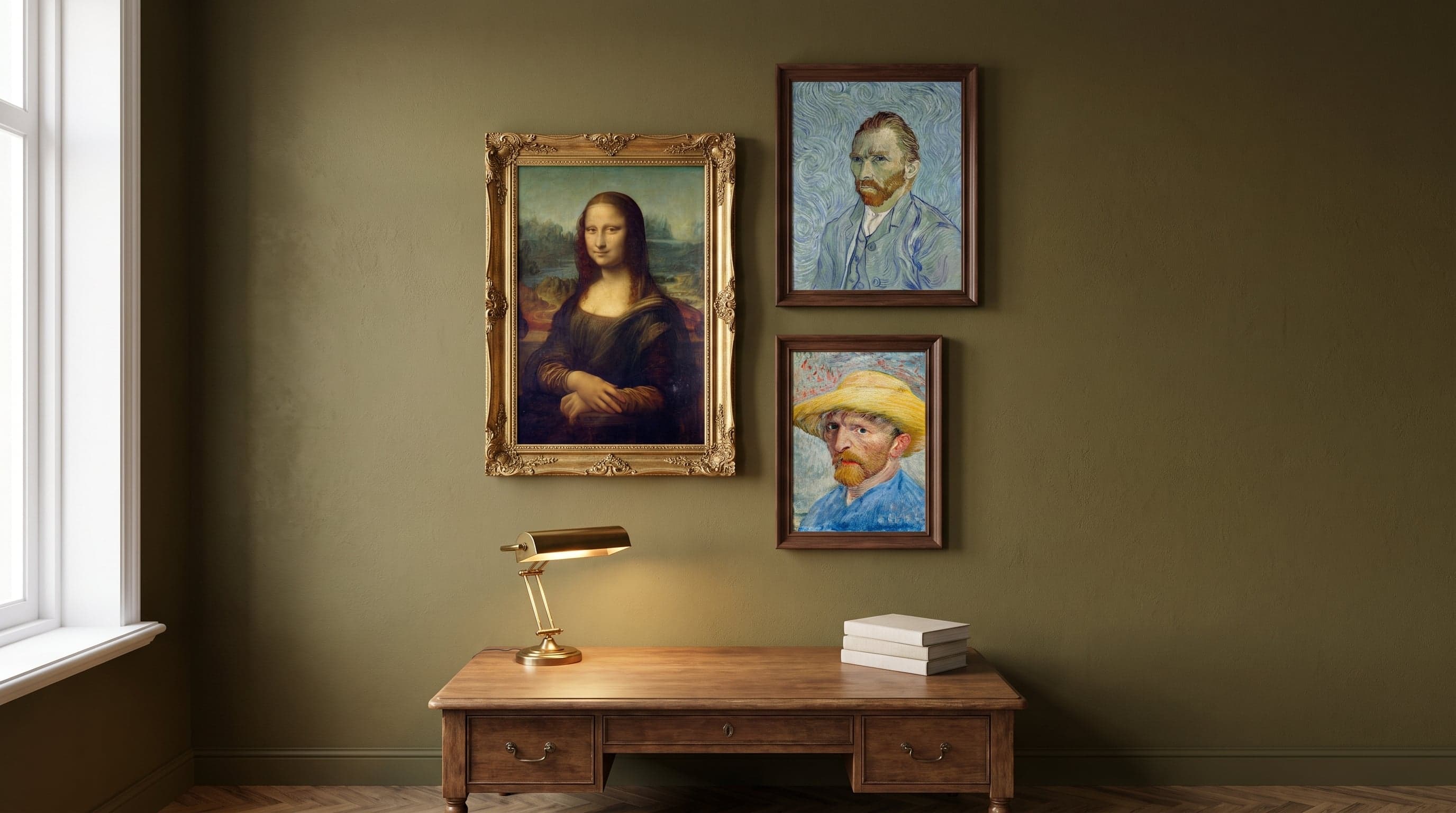
There's something persistent in our need to depict ourselves. Long before art had words for styles and movements, there was already the face, the hand, the contour of the body – rendered in charcoal, in oil, in stone. Figurative art is perhaps the oldest impulse of all: to see someone, and to want to show what you've seen.
Against abstraction's shapes and colour fields, figurative art stands as both counterpoint and conversation partner. Where abstraction often seeks feeling through the absence of recognition, the figurative builds its power in the opposite direction – in a gaze meeting another gaze, in a posture that tells a story before a single word is spoken. A portrait doesn't demand interpretation in the same way as a colour field; instead, it offers a different kind of mystery, the one found in a human face.
This article is an introduction to figurative imagery as both tradition and contemporary expression – a way into the many ways art has returned to the body and the face, through centuries and shifts in style, right up to the figurative art prints that adorn walls today.
The Face as History's Archive
Few subjects have gripped art history as firmly as the portrait. Leonardo da Vinci's Mona Lisa and Lady with an Ermine are not just technical masterpieces – they are studies in what a face can conceal as much as it reveals. The smile that never quite commits, the gaze that looks past the viewer rather than at them. It's this kind of tension that has made the portrait one of art's most enduring genres, whether painted with Renaissance precision or in Gustav Klimt's decorative, gold-shimmering lines.
Klimt's portraits of women from the turn of the 20th century represent a different kind of figurative language – less concerned with anatomical accuracy, more with pattern, surface, and a kind of psychological presence that emerges through ornamentation. The face remains the subject's centre, but everything surrounding it has become art in its own right.


The Self-Portrait – A Gaze Turned Inward
No one turned the self-portrait into as systematic an investigation as Vincent van Gogh. Over just a few years, he painted himself again and again – bearded, clean-shaven, with a pipe, with a bandaged ear – not out of vanity but out of necessity. He could rarely afford models, and the mirror became his most accessible subject. The result is a series of portraits that together function as a diary in colour, where every brushstroke records a state of mind rather than a likeness.
It's this tension between documentation and expression that makes figurative art so different from abstraction. Van Gogh never distorted his face beyond recognition – but he let the colour, the brushwork, and the composition carry as much meaning as the features themselves. The figure is recognisable. The feeling remains abstract.


The Stage, the Night, and the Body in Motion
Henri de Toulouse-Lautrec carried the figurative tradition out of the studio and into Paris's cabarets. His posters of Jane Avril, Aristide Bruant, and the Divan Japonais are not portraits in the classical sense – they are snapshots of a city in motion, captured with a speed that feels almost journalistic. The line becomes caricatured, the colour flattened, yet the person being depicted remains undeniably present, amid all the stylisation.
The same fascination with the body in motion appears in the work of Edgar Degas, whose dancers became something of a lifelong study. He was less interested in the glamour of ballet than in its labour – the tension in the shoulders, the discipline of the legs, the fatigue behind the pose. Figurative imagery is rarely just about rendering a body; it's about showing what that body does.


The Nude Study – The Body Before the Role
For Auguste Rodin, the human body was an ongoing experiment, whether drawn or cast in bronze. His studies of nude figures – bent, twisted, caught mid-motion that never quite resolves – are interested in anatomy as structure rather than as idealised form. These are bodies that work, balance, nearly fall, and precisely because of that, they feel truer than many more polished depictions.
Degas's nude studies move in a similar direction, but in a different light – women drying themselves, combing their hair, existing in moments never meant to be observed. Here, nakedness carries less erotic charge and becomes more a way of studying the body stripped of the social role that clothing otherwise assigns it. It's a theme worth exploring further, but even here it's clear how central the nude study has been to figurative art as a method of inquiry.


Figurative Imagery in Contemporary Prints
The figure has never disappeared, but its form has changed. Henri Matisse and the Fauvists dissolved the body into colour fields and simplified lines without abandoning it entirely – a woman in a green dress, a bather at the shore, the form reduced but the person still recognisable. Klimt's The Kiss takes this a step further, where the bodies nearly merge with their decorative landscape of gold and pattern.
In contemporary prints featuring people, the same movement between figuration and abstraction can be seen – faces and bodies suggested through a few decisive brushstrokes or monochrome surfaces, rather than detailed realism. It's a visual language that trusts the viewer to fill in the rest, which might be figurative art's most enduring quality: it never requires completeness to feel human.


Frequently asked questions
- What is figurative art?
- Figurative art is an umbrella term for visual art based on recognisable subject matter – primarily people, but also animals and objects. Its opposite is abstract art, which works with form, colour, and composition without direct reference to reality.
- What's the difference between figurative art and portraiture?
- Portraiture is a specific branch within figurative art, focused on the face and identity. Figurative art is broader and also encompasses the body in motion, groups of people, and scenes where the figure isn't always the main subject.
- Can figurative prints be combined with a more minimalist interior?
- Yes. Many contemporary figurative works already work with simplified lines and limited colour palettes, making them easy to place in rooms with a clean, cohesive look.
- Does figurative art have to be realistic?
- No. Figurative art spans an entire spectrum, from detailed realism to strong stylisation – sometimes bodies and faces are merely suggested rather than rendered in detail, without the subject ceasing to feel human.